
Introduction: The Last Mile That Defines Your Book
Imagine spending months—sometimes years—building a house from the ground up.
You choose the perfect design, carefully construct every wall, and install beautiful interiors.
Then, just before moving in, you decide to skip the final inspection.
Suddenly, a loose tile, an uneven staircase, or a faulty switch becomes the first thing visitors notice.
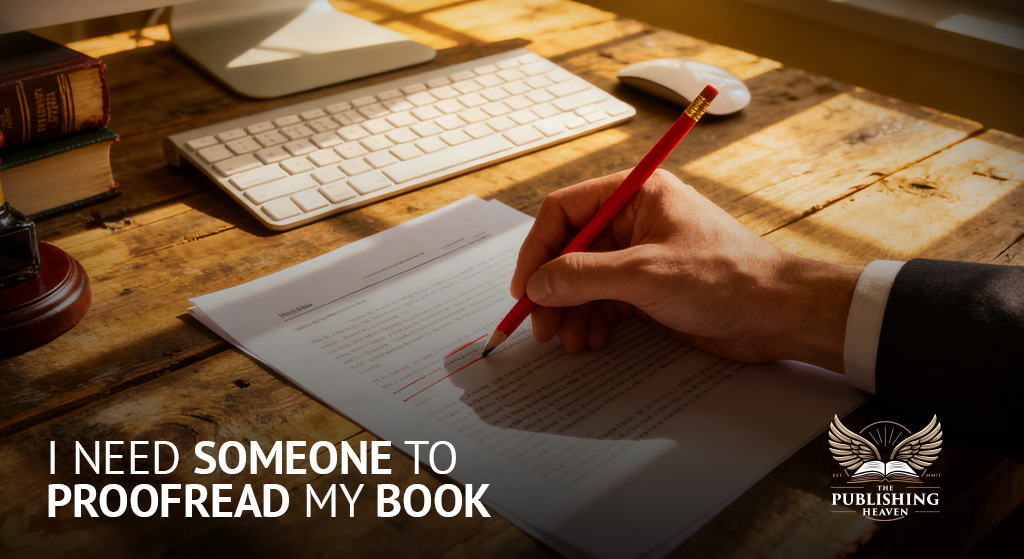
That’s exactly what happens when authors say, “I need someone to proofread my book,” but delay taking action.
Proofreading is not just a technical step.
It’s the finishing touch that transforms your manuscript into a professional, polished publication.
Even the most compelling story or valuable nonfiction book can lose credibility due to small errors:
- Typos
- Grammar mistakes
- Inconsistent formatting
- Missing punctuation
- Awkward spacing
- Incorrect capitalization
Readers may not consciously analyze these issues, but they feel them. And when they do, trust disappears.
This guide will walk you through everything you need to know—from understanding proofreading to hiring the right professional and ensuring your book shines.
What Does It Mean When You Say “I Need Someone to Proofread My Book”?
When authors search “I need someone to proofread my book,” they’re usually at one of two stages:
- The manuscript is finished and ready for publishing
- The author wants a final quality check before submission
Proofreading is the last stage of editing, focused on catching surface-level errors without changing content structure.
Proofreading vs Editing — Know the Difference
Understanding this distinction saves time and money.
Proofreading Includes:
- Grammar corrections
- Spelling fixes
- Punctuation checks
- Formatting consistency
- Typographical errors
- Layout issues
Editing Includes:
- Sentence restructuring
- Tone adjustments
- Clarity improvements
- Flow enhancement
- Content suggestions
If your book still needs structural improvements, you may need editing first.
But if your manuscript is polished and ready, proofreading is the right move.
Why Proofreading Your Book Is Non-Negotiable
Many authors assume they can proofread their own work.
While possible, it’s rarely effective.
Here’s why.
Your Brain Fills the Gaps
When you read your own writing, your mind auto-corrects mistakes.
You see what you intended to write—not what’s actually on the page.
Professionalism Matters
Whether self-publishing or submitting to publishers, quality matters.
Errors signal carelessness.
Readers associate mistakes with:
- Low credibility
- Poor research
- Lack of professionalism
Reviews Can Be Brutal
One common negative review:
“Great concept, but too many typos. Hard to read.”
A single comment like that can hurt sales and reputation.
Signs You Definitely Need Someone to Proofread Your Book
If any of these sound familiar, it’s time to hire help:
- You’ve rewritten sections multiple times
- You’re too close to the content
- You plan to self-publish
- English is not your first language
- You want professional credibility
- You’re submitting to agents or publishers
- You’ve formatted your book for print or Kindle
- You’ve already completed editing
These signals clearly indicate: I need someone to proofread a book professionally.
What a Professional Proofreader Actually Does
A skilled proofreader works like a quality control specialist.
They examine:
- Sentence mechanics
- Typographical errors
- Consistency in names and terms
- Formatting alignment
- Dialogue punctuation
- Chapter numbering
- Headers and footers
- Page breaks
- Spacing issues
They don’t rewrite your voice — they refine presentation.
Where to Find Someone to Proofread Your Book
When authors say “I need someone to proofread my book,” they often don’t know where to look.
Here are the most reliable options:
Freelance Platforms
- Professional freelancers
- Flexible pricing
- Reviews and portfolios available
Publishing Agencies
- Premium service
- Higher cost
- Managed workflow
Professional Editors’ Associations
- Verified professionals
- Industry-standard expertise
Referrals from Authors
- Trusted recommendations
- Proven results
How Much Does Book Proofreading Cost?
Costs vary depending on:
- Word count
- Genre
- Complexity
- Turnaround time
- Proofreader experience
Typical ranges:
| Book Length | Estimated Cost |
| 20,000 words | $150 – $400 |
| 50,000 words | $300 – $800 |
| 80,000 words | $500 – $1,200 |
| 100,000+ words | $700 – $1,500+ |
Cheaper is not always better.
Quality proofreading protects your investment.
Step-by-Step: How to Hire the Right Proofreader
Step 1: Finish Editing First
Proofreading should happen after:
- Developmental editing
- Line editing
- Content revision
Step 2: Define Your Goals
Ask yourself:
- Self-publishing?
- Traditional publishing?
- Ebook only?
- Print and ebook?
Step 3: Request a Sample Edit
Professional proofreaders usually offer:
- 500–1,000 word sample
- Quality preview
- Compatibility check
Step 4: Check Experience
Look for:
- Book proofreading experience
- Genre familiarity
- Reviews/testimonials
- Portfolio
Step 5: Confirm Timeline
Typical turnaround:
- 50,000 words: 5–7 days
- 80,000 words: 7–10 days
Questions to Ask Before Hiring a Proofreader
Before you finalize, ask:
- Have you proofread books before?
- What genres do you specialize in?
- Do you use track changes?
- What style guide do you follow?
- What is your turnaround time?
- Do you offer a second pass?
These questions protect you from poor results.
Common Mistakes Authors Make When Seeking Proofreading
Hiring Too Early
Proofreading before editing wastes money.
Choosing the Cheapest Option
Low-cost services often miss errors.
Skipping the Sample
Always review a sample first.
Not Clarifying Scope
Some proofreaders only check grammar, not formatting.
Self-Publishing Authors: Why Proofreading Matters Even More
Traditional publishers include proofreading.
Self-published authors must manage quality themselves.
Without proofreading:
- Your book looks amateur
- Readers lose trust
- Sales drop
- Reviews suffer
Proofreading is an investment in credibility.
Real Scenario: Before and After Proofreading
Before:
The journey wasnt easy but she continued forward, knowing someday things would change.
After:
The journey wasn’t easy, but she continued forward, knowing someday things would change.
Small change. Big impact.
How Long Does Book Proofreading Take?
Turnaround depends on:
- Word count
- Complexity
- Proofreader workload
- Urgency
Average timelines:
- 30,000 words: 3–5 days
- 60,000 words: 5–7 days
- 90,000 words: 7–10 days
Rush options may cost extra.
Checklist Before Sending Your Book to a Proofreader
Prepare your manuscript:
- Final draft completed
- Consistent formatting
- Double-spaced (if Word file)
- Standard font (Times New Roman)
- Clear chapter breaks
- Removed tracked edits
- Finalized title
This helps the proofreader work efficiently.
What File Formats Proofreaders Prefer
Most common:
- Microsoft Word (.docx)
- Google Docs
- PDF (for final layout check)
Word is preferred for track changes.
Should You Use Multiple Proofreaders?
Usually, one experienced proofreader is enough.
However, two passes help when:
- Book is long
- Technical content
- Academic writing
- High-stakes publishing
How Proofreading Impacts Book Sales
Readers notice quality subconsciously.
Polished books:
- Gain better reviews
- Improve credibility
- Increase recommendations
- Boost sales
Proofreading pays for itself.
When You Should NOT Skip Proofreading
Never skip if:
- Publishing on Amazon
- Submitting to agents
- Printing physical copies
- Selling professionally
- Building author brand
Final Thoughts: Your Book Deserves a Professional Finish
Writing a book is a major achievement.
But publishing a polished book is what builds authority.
When you say “I need someone to proofread my book,” you’re taking the final professional step.
Proofreading:
- Protects your credibility
- Enhances readability
- Improves reader experience
- Increases sales potential
It’s the difference between a good book and a professional one.
Your ideas deserve clarity.
Your readers deserve quality.
Your book deserves precision.
FAQs
Do I really need someone to proofread my book?
Yes. Even experienced writers miss errors. A proofreader ensures professional quality.
When should I hire a proofreader?
After completing all editing stages and before publishing.
Can I proofread my own book?
You can, but it’s not recommended. Fresh eyes catch more mistakes.
How much does proofreading cost?
Typically $300–$1,200 depending on length and complexity.
How long does proofreading take?
Usually 5–10 days for standard-length books.
What’s the difference between editing and proofreading?
Editing improves content; proofreading fixes surface-level errors.
Should I hire a proofreader before formatting?
You can do both. Many authors proofread after formatting for final checks.
Is proofreading necessary for self-published books?
Absolutely. Self-published authors must ensure quality themselves.
Your manuscript is almost there.
Now give it the professional finish it deserves. ✍️📘
