
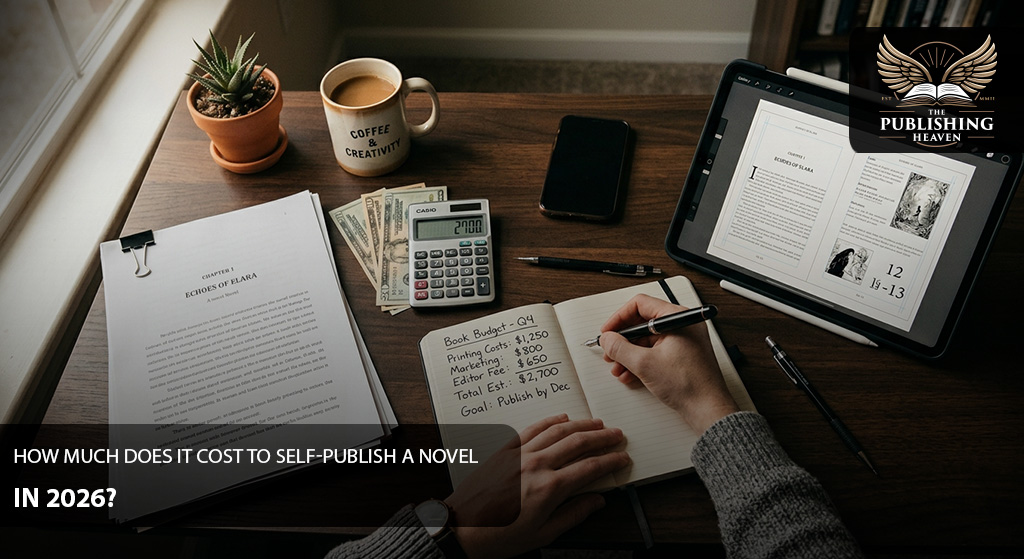
If you’re wondering how much it costs to self-publish a novel, the answer depends on your publishing choices. Some authors publish without upfront platform fees, while others invest thousands in professional book production.
In 2026, professional self-publishing commonly costs several thousand dollars. However, expenses vary according to manuscript length, editing needs, cover design, formatting, and marketing.
According to Reedsy’s 2026 publishing cost research, a professional self-publishing project may cost approximately $2,940 to $5,660. Nevertheless, these figures represent marketplace estimates rather than mandatory publishing fees.
Understanding each expense helps authors avoid unnecessary spending. Moreover, a realistic budget supports better decisions throughout the publishing journey.
This guide explains the major costs, compares publishing options, and explores practical ways to manage your investment.
Table of Contents
- How Much Does It Cost to Self-Publish a Novel?
- Self-Publishing Cost Breakdown for 2026
- Editing and Proofreading Costs
- Book Cover Design and Formatting Expenses
- Printing, ISBN, and Distribution Costs
- Book Marketing and Promotion Expenses
- Publishing Companies and Professional Support
- How to Reduce Self-Publishing Costs
- Common Budgeting Mistakes
- Frequently Asked Questions
- Conclusion
How Much Does It Cost to Self-Publish a Novel?
Self-publishing expenses depend on the services an author chooses. Therefore, publishing an eBook independently may require little upfront investment.
However, producing a professionally edited, designed, and marketed novel usually requires a larger budget.
Authors generally encounter three spending levels.
Budget Self-Publishing
Budget-conscious authors can use free publishing tools and handle several production tasks themselves.
For example, Amazon Kindle Direct Publishing allows authors to upload eBooks and print books without publishing fees.
Nevertheless, authors remain responsible for manuscript quality, design, and promotion.
Mid-Range Self-Publishing
Some authors hire freelancers for essential services while managing other tasks independently.
For instance, they may purchase professional editing and cover design while handling formatting and marketing themselves.
Consequently, this approach offers greater flexibility without requiring a complete publishing package.
Comprehensive Professional Self-Publishing
Authors seeking extensive support may hire specialists for editing, proofreading, design, formatting, and marketing.
Additionally, some publishing service companies coordinate several production stages.
However, higher spending does not automatically guarantee stronger sales. Authors should evaluate deliverables and realistic publishing goals.
Self-Publishing Cost Breakdown for 2026
The following table outlines ten common self-publishing expenses. The figures represent illustrative US-dollar budgets, not fixed industry rates.
| # | Publishing Expense | Estimated Cost in USD | Purpose |
| 1 | Developmental editing | $1,500–$3,500 | Improve plot, structure, characters, and pacing |
| 2 | Copyediting | $800–$2,200 | Correct grammar, clarity, and consistency |
| 3 | Proofreading | $500–$1,600 | Identify remaining language errors |
| 4 | Book cover design | $300–$1,200 | Create a professional, genre-appropriate cover |
| 5 | Interior formatting | $0–$800 | Prepare ebook and print layouts |
| 6 | ISBN registration | $0–$125 | Obtain an identifier for a print edition |
| 7 | Publishing platform setup | $0 on KDP | Upload and list the finished manuscript |
| 8 | Print proof copies | $20–$100 | Review physical samples before release |
| 9 | Book marketing | $100–$1,500 | Promote the novel to potential readers |
| 10 | Author website | $0–$500 | Establish an online author presence |
These estimates are planning allowances for a typical novel project. Actual quotations depend on the book, provider, country, and required services.
Additionally, the categories are optional or conditional. Authors should not simply add every maximum figure to calculate a required publishing fee.
Editing and Proofreading Costs
Professional editing often represents the largest self-publishing investment. Therefore, understanding editorial services helps authors allocate their budgets effectively.
Developmental Editing
Developmental editing examines the overall manuscript structure. Editors evaluate storytelling, character development, plot progression, pacing, and narrative consistency.
For example, a developmental editor may identify weak character motivations or unnecessary scenes.
Consequently, authors can strengthen important story elements before finalizing their manuscripts.
However, the cost depends on manuscript length and editorial complexity.
Copyediting
Copyediting focuses on sentence quality, grammar, spelling, punctuation, and consistency.
Additionally, editors identify unclear expressions and repetitive wording.
Professional book editing services can help authors improve readability while preserving their writing style.
Nevertheless, copyediting should not replace major structural revisions when the manuscript still needs development.
Proofreading
Proofreading represents the final language review before publication. It catches overlooked spelling, punctuation, and formatting inconsistencies.
Moreover, proofreading can identify errors introduced during previous editing or production stages.
According to Reedsy’s professional marketplace data, editorial costs vary considerably by service type and manuscript length. Therefore, authors should request individual quotations before committing.
Book Cover Design and Formatting Expenses
Readers often encounter a novel’s cover before reading its description. Consequently, professional presentation deserves careful attention.
Professional Book Cover Design
A suitable cover should communicate genre, tone, and reader expectations.
For example, romance covers often use different visual conventions from thrillers or historical fiction.
Reedsy’s 2026 research reports an average cover design price around $930 across its professional marketplace. However, simpler designs may cost less, while customized illustrations can cost considerably more.
Authors can also explore professional book cover design when comparing creative options.
eBook Formatting
eBook formatting prepares text for digital reading devices. It involves chapter organization, navigation, spacing, and compatible file production.
Fortunately, some publishing platforms provide free conversion tools. However, complex manuscripts may require additional formatting assistance.
Paperback and Hardcover Formatting
Printed novels require appropriate trim sizes, margins, page numbering, and consistent interior layouts.
Additionally, hardcover and paperback editions may need separate production files.
Professional book formatting services can help prepare manuscripts for different publishing formats.
Therefore, authors should confirm which formats their chosen service includes.
Printing, ISBN, and Distribution Costs
Printing and distribution expenses depend on the platforms and book formats authors select.
Amazon Kindle Direct Publishing
Amazon KDP provides free manuscript uploads for eligible eBooks, paperbacks, and hardcovers.
However, printing costs affect the royalties earned from physical book sales.
Therefore, authors should use the official KDP Printing Cost and Royalty Calculator before setting retail prices.
Printing expenses depend on page count, paper type, ink selection, and marketplace.
ISBN Registration
An ISBN identifies a particular book edition or format. However, not every publication requires an independently purchased ISBN.
KDP offers free ISBNs for eligible paperback and hardcover editions. Meanwhile, Kindle eBooks do not require ISBNs.
Authors seeking their own US identifiers can purchase them through Bowker.
One ISBN currently costs $125 through Bowker’s published pricing. However, ISBN prices and issuing arrangements vary by country.
Book Distribution
Distribution determines where readers can purchase your novel.
Amazon KDP provides access to Amazon marketplaces. However, authors exploring broader retail distribution may consider additional services.
For example, Draft2Digital distributes eBooks through participating retail channels. Its current pricing information describes commissions and potential account fees.
Therefore, compare distribution coverage, royalties, account charges, and contractual conditions before choosing a provider.
Book Marketing and Promotion Expenses
Publishing a novel does not automatically generate reader awareness. Consequently, marketing plays an important role in reaching potential buyers.
Social Media Marketing
Social media allows authors to promote books through relevant content, reader engagement, and launch announcements.
Additionally, platforms can support author branding and communication with followers.
Organic promotional activities may require little direct spending. However, professional content development and advertising can increase expenses.
Paid Book Advertising
Paid advertising helps introduce novels to targeted audiences.
For example, Amazon provides advertising options for eligible KDP books. Authors can also explore other channels based on their readership.
Nevertheless, advertising results depend on targeting, competition, pricing, and creative quality.
Start with a manageable budget and monitor performance before increasing spending.
Author Websites
An author website creates a central location for book information, updates, and reader contact.
Moreover, an effective website can support newsletters and future book launches.
Website expenses depend on hosting, design requirements, maintenance, and additional features.
Therefore, choose functionality that matches your current publishing needs.
Publishing Companies and Professional Support
Authors who prefer assistance can explore professional publishing service providers. However, every company offers different packages and areas of expertise.
Therefore, compare available services, written proposals, revision policies, and pricing before making a commitment.
The Publishing Heaven offers services related to manuscript development, editing, formatting, book design, and publication preparation.
Consequently, authors can explore different forms of assistance according to their manuscript’s condition.
Additionally, authors should request a detailed service breakdown to understand the project’s overall cost.
360 Book Marketeers is another company authors can consider when exploring book marketing and promotional support.
Marketing becomes especially relevant after completing a novel’s production stages.
Therefore, authors should confirm available promotional services, campaign scope, and associated expenses.
Global Book Distributors is an option to investigate for book distribution and related publishing assistance.
Distribution planning helps authors understand potential sales channels and retail availability.
However, authors should verify distribution arrangements, retailer coverage, royalties, and additional charges before proceeding.
KDP Publishing Team is another company authors can investigate when comparing publishing assistance.
Before choosing a service, clarify manuscript preparation requirements, responsibilities, and contractual terms.
Importantly, independently branded publishing companies should not automatically be confused with Amazon’s official KDP service.
Amazon confirms that its own KDP publishing platform is free and warns authors about companies falsely claiming an affiliation.
How to Reduce Self-Publishing Costs Without Sacrificing Quality
Authors can manage publishing expenses through careful preparation and realistic budgeting.
However, reducing costs should not mean overlooking essential manuscript quality.
Complete Thorough Manuscript Revisions
Before hiring an editor, review your manuscript for structural weaknesses and inconsistencies.
Additionally, seek feedback from trusted beta readers.
Consequently, professional editors can concentrate on improvements that require their expertise.
Compare Professional Service Packages
Different providers may offer individual services or combined publishing packages.
Therefore, request written quotations and compare the included deliverables.
Check revision allowances, production formats, deadlines, and additional fees before signing an agreement.
Use Free Publishing Tools Where Appropriate
Some publishing tools allow authors to format and upload books without upfront charges.
For example, Amazon KDP provides free publishing tools for supported formats.
However, authors still need to review their files carefully before publication.
Build a Realistic Marketing Plan
Start by identifying your intended readership and appropriate promotional channels.
Next, select marketing activities that match your financial resources.
Additionally, track expenses and results to understand which efforts justify continued investment.
Common Budgeting Mistakes Authors Should Avoid
Inadequate planning can create unnecessary financial pressure. Therefore, authors should recognize potential problems before beginning publication.
Spending Everything on Production
Editing and design are important, but publication represents only one stage of the journey.
Consequently, consider reserving part of your budget for promotion and ongoing book support.
Choosing Services Without Comparing Deliverables
Two publishing packages may carry similar prices while offering different levels of assistance.
For example, one package may include proofreading, while another provides formatting alone.
Therefore, review exactly what each quotation covers.
Ignoring Printing and Royalty Calculations
Retail book prices do not equal author earnings. Printing expenses and platform royalty structures influence the final amount.
Moreover, distribution commissions may vary across services.
Use official pricing calculators to estimate potential earnings before publication.
Expecting Guaranteed Sales
Professional publishing assistance can improve production quality. However, no service can guarantee commercial success.
Therefore, avoid relying on unsupported sales promises when evaluating offers.
Frequently Asked Questions
1. How much does it cost to self-publish a novel in 2026?
Self-publishing can involve no upfront platform fees when authors handle production themselves.
However, professionally edited and designed books commonly require several thousand dollars. The final amount depends on manuscript needs and selected services.
2. Can I self-publish my novel for free?
Yes. Amazon KDP allows authors to publish eligible eBooks and printed books without upfront publishing fees.
However, optional editing, cover design, marketing, and print proof copies may involve additional expenses.
3. What is the most expensive part of self-publishing a novel?
Professional editing is often among the largest expenses.
Developmental editing and copyediting can require substantial work, especially for lengthy manuscripts.
Consequently, authors should consider their editing requirements early in the budgeting process.
4. How much does it cost to publish a 300-page novel?
The cost depends on editing needs, manuscript length, design complexity, and selected formats.
However, page count alone cannot determine the total expense.
Therefore, request quotations based on your actual manuscript and production requirements.
5. Do I need to purchase an ISBN for my novel?
Not necessarily. Amazon KDP offers free ISBNs for eligible paperback and hardcover editions.
However, authors seeking greater flexibility across publishing platforms may prefer independently registered ISBNs.
6. Is self-publishing cheaper than traditional publishing?
Traditional publishers generally cover the publication expenses of books they acquire.
Conversely, independent authors usually finance their chosen production and promotional services.
However, self-publishing provides greater control over many publishing decisions.
7. How much should a first-time author spend on marketing?
There is no universal marketing budget for first-time authors.
Instead, authors should consider their readership, financial resources, and promotional goals.
Start with manageable activities and evaluate results before expanding.
8. Can self-published authors earn money from their novels?
Yes. Independent authors can earn royalties through eBook, paperback, and hardcover sales.
However, earnings depend on sales volume, retail pricing, printing expenses, and distribution arrangements.
Consequently, authors should calculate potential royalties before making major investments.
Conclusion
Understanding how much it costs to self-publish a novel helps authors plan realistic budgets and make informed publishing decisions. Although publishing platforms may charge nothing upfront, professional editing, design, formatting, and promotion can increase expenses considerably.
The most effective approach involves identifying essential services, comparing quotations, and prioritizing manuscript quality. Additionally, authors should understand printing costs, royalty arrangements, and distribution options before publication. Careful preparation can prevent avoidable expenses while supporting a professional finished product.
For authors considering professional assistance, The Publishing Heaven offers manuscript development and publishing-related services. Meanwhile, 360 Book Marketeers is an option for exploring marketing support, while Global Book Distributors and KDP Publishing Team are additional companies to investigate for publishing-related needs.
Every novel follows a different publishing journey. Therefore, choose services according to your manuscript, audience, goals, and available budget. A thoughtful investment plan can help transform your completed story into a book ready for readers.
